Crowding Out Evil
My Theology Was Insufficient About Evil

Hannah Arendt gave us a gift in her writing about the banality of evil. Arendt wrote about the trial of Adolf Eichmann in 1963. Where so many people wanted to paint the Nazis as “monsters” for their actions, Arendt showed how “ordinary” Eichmann was. He did not exhibit extreme hatred, nor did psychologists diagnose him with mental illness or as a sociopath. What Arendt noted was that Eichmann did not think for himself. He kept parroting empty phrases without any deeper connection to reality. He exhibited no imagination or critical thinking.
The banality of evil scares me. I am reminded of Arendt’s insights these days. In the past few weeks, I have been appalled at the depths of evil in the news, and how ordinary it is becoming.
A president threatens the destruction of a civilization. A defense secretary quotes the movie Pulp Fiction to justify violence as if it were actually scripture. A web-based group of men focuses on drugging women in order to rape them (with 62 million visits in one month). Another mass killing occurs in Louisiana, and the country moves on without significant action.
It is disheartening and aggravating. It is evil.
Let me tell you about the time I realized I had an insufficient theology regarding evil.
It kind of surprised me, actually, because I thought I had done plenty of study on evil within my faith perspective. I did my major paper in college on Dietrich Bonhoeffer, so I had spent the better part of several years studying Nazi Germany, the Holocaust, and the evils under which people suffered leading up to war.
I studied Gandhi and King, as well their wider movements to address the violence and racism of their respective oppressors. A course in seminary on “God and Evil” brought me deeply into both evil actions and responses for justice. I thought I had worked on my theology around evil.
I began to realize how insufficient my theology was regarding evil on a Friday morning over a decade ago. I was taking my father-in-law to the credit union. He could no longer drive because of a stroke. It was my day off, so we were running errands when my cell phone rang.
A sergeant from the St. Paul Police Department was calling. I do not generally receive phone calls from the police. The last time I had gotten a call from the police was because there had been a suicide of a church member. Not this time.
The sergeant said a parishioner had been arrested with a gun, ammunition, and threatening letters against the man’s ex-wife, her friend, my colleague and our church. They were specific. They were serious.
We had been dealing with challenges with this man for a few years. There were numerous difficult episodes, but we dealt with them as a community. After a divorce and court proceedings, we thought they were over. We thought he had moved on. I did not have a robust enough theology around evil.
I learned how the twisted depth of evil can warp people more than we see. How banal it could often seem. How confusing it could be to make sense of it all. Evil does not make sense. While I had been uncomfortable to label any situation as “evil” for most of my life, I began to learn the layers and textures of evil now. How it eats away at your understanding of the world. How it can erode your sense of meaning.
When I was younger, I used to ask the questions of theodicy (how can God allow evil?). Because of the experience over a decade ago, my theology now focuses simply on resources that help to respond for justice and well-being. For me, the promise of God who comes enfleshed in Jesus and goes through what we humanly face is strengthening. The cross shows a depth I have needed to know of God’s solidarity. Resources are right here, enfleshed in community.
We are not alone. My theology now focuses not so much on eradicating evil here (as if that were possible) but to crowd it out with goodness. My theology has become more robust in awareness and response that way. Hannah Arendt showed the banality of evil. I keep learning from the people around me about signs of goodness that crowds out evil.
What happened in the community at our church a decade ago is what keeps me going. People responded generously to support the threatened woman financially and emotionally. Surrounded by caring community, she has grown in courage and made a new life.
People responded graciously to new measures for security at church. Where we had generally kept doors unlocked and open all the time, we began to learn how to utilize key cards and a door system so we kept people safe throughout the week.
The police were responsive. The bishop and synod were supportive. The community was unified. There was a sense of “we can do this.” I learned that while we cannot eradicate evil, God is present in cultivating goodness and love in community. My theology focuses more on crowding out evil together. That takes intention, effort, and persistence, and it is possible.
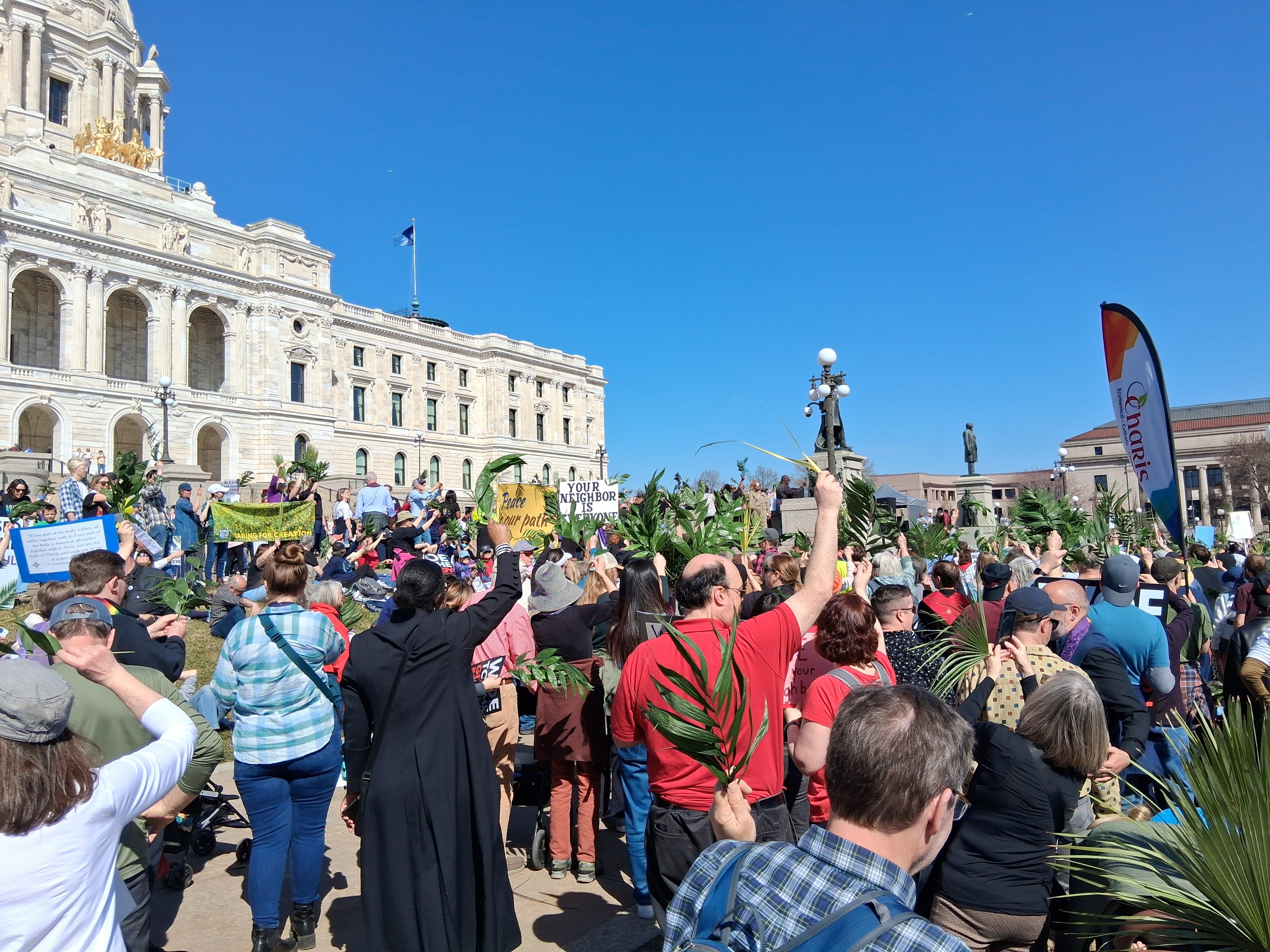
As we face the evil actions in our world now, I often feel appalled. And then I remember that evil has so little imagination. Evil cannot imagine how much our solidarity can create new situations, different possibilities. Love organized in community offers a new chance. The news still appalls me frequently, so I am grateful for those who keep shining light on a better path.
I've read a lot of things about evil in the last few months and that's the most useful sentence I've encountered. It reminds me what evil can't do. It can't imagine what people organized around love might pull off. It keeps underestimating that. Maybe that's enough to work with.
Thank you for keeping me hopeful bro :)
Disheartened, appalled
by cruelty’s brazen spreading?
Time for garden crew.
...
While we weed, what else
for life’s/good’s earnest efforts?
“Crowding out evil”!