Walking a Labyrinth
Winding Paths & Prayerful Steps

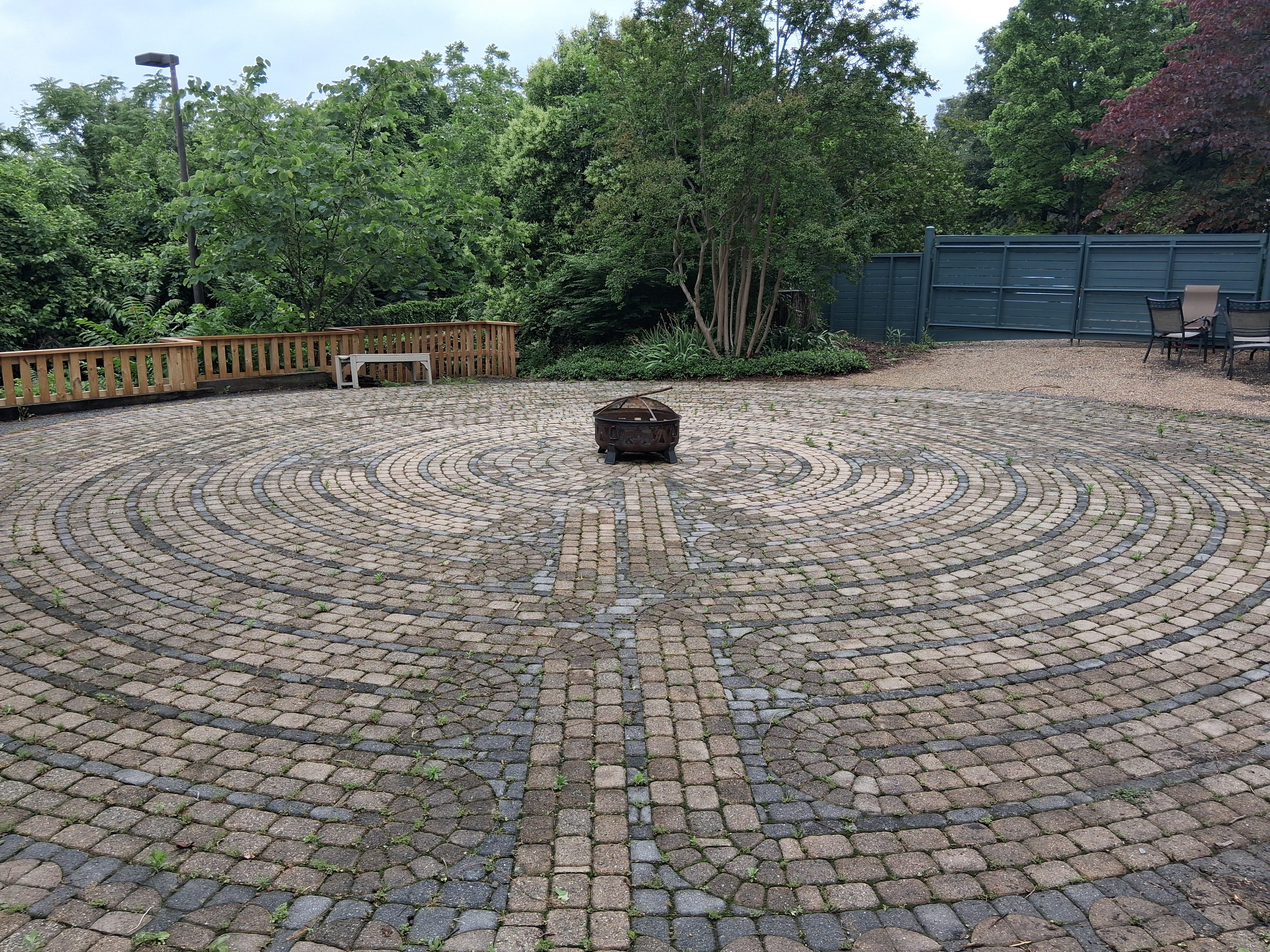
I walked the labyrinth at Richmond Hill four times over three days. Each time brought me wider in prayer, deeper in stillness.
Richmond Hill is an urban retreat center, housed in a former monastery, with residents from different traditions making an ecumenical space available for spiritual practices, with a chief focus on racial healing. Since Richmond has deep history with enslavement, the Confederacy, and the after-effects of that wound, there is plenty of room for healing and transformation.
The labyrinth at Richmond Hill sits above the city. A labyrinth is not a maze. You cannot get lost. There is one way in, and one way back. A labyrinth was created in Chartes centuries ago for those who could not make the pilgrimage to Jerusalem. Now I walked one in Richmond.
Walking the labyrinth meant I was accompanied on all the twists and turns by great-crested flycatchers, cardinals and Carolina wrens. These mingled with the noises of I-95 and garbage trucks, children at the playground a block away, and the sounds of Richmond and its history below.
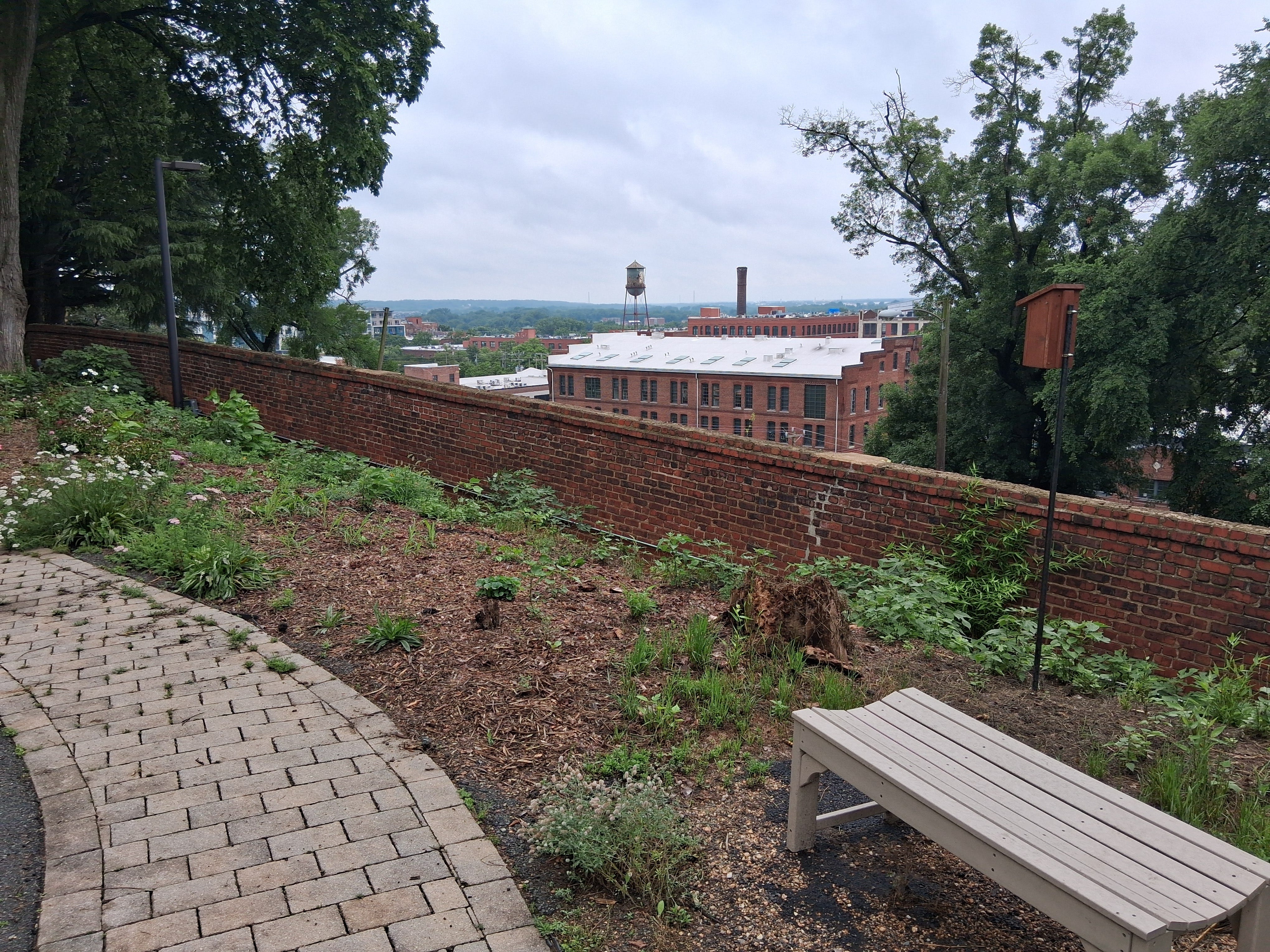
The twists and turns of the labyrinth were about the twists and turns of our human society, specifically Richmond but connected to our country’s ongoing actions. These included buying and selling human beings, splitting up families, and denying rights long afterward. Alongside those horrors, we remembered the resolve of enslaved persons teaching children to read, showing courage to subvert the Confederacy, sharing faith and love in a vital community despite their oppressors.
It is complicated in history and in our being. We are part of a messy complexity.
The twists and turns also fit my own personal journey. My relationships, my responsibilities, my wondering about who I am, what I have done, and what I need to do now. My failings and limitations along with possibilities and gifts. The twists and turns invite me to a path of renewal.
Each turn of the labyrinth has significance, as I slowly noticed. Each winding turn has three layers of stone - 12 stones at the outer edge, 7 in the middle, four in the inner curve. 12 is significant for the 12 tribes of Israel, 12 apostles. 7 is significant for the days of creation, for the days of the week. 4 is significant for the gospels, for the wind’s directions.
Or maybe those were just the number of stones that fit. There were a number of partial rocks along the long paths to make the spacing work with different sized paving stones. My life is filled with broken rocks that make the path, too. And sometimes I notice patterns I had missed earlier.
The labyrinth reflects how a path of healing - both societal and personal - is complicated, with twists and turns. In walking the labyrinth, there is a fourfold invitation. At the start, remember. Remember those who are on my mind and heart, and remember what I carry.
Walking the labyrinth then is a chance to release. To release clutching tightly and let the Spirit flow. To release control or certainty or fear or hurts or whatever in order to be present.
Entering the center is an invitation to receive. A chance to receive wisdom, whatever it is for that moment and space. A chance to receive myself again. A chance to receive God, love, presence, possibility. Receive.
The path out from the center is an invitation to return. To return to my life, my world, but maybe with a different perspective or spirit accompanying me. Return is an invitation to live.
With Richmond below the labyrinth, the setting mattered for my walking prayer on those days. I imagined all the history of enslavers and enslaved, those affected by the aftermath for centuries, those working on transformation both personal and societal.
There is much more to share about what impact the people I met at Richmond Hill had on me, because that is another story. For now, I can say that I met a diverse group of folks worrying about finances and leaky ceilings after rainstorms and global climate change’s effects on their grandchildren and immigration hurdles for visas and people who were in the hospital.
There was a time of prayer every day at 7:00 am, 12:00 noon, and 5:30 pm, with prayers for Metropolitan Richmond. We prayed for a national health care system that sought well-being for all people. We prayed for those affected by violent crime, for those incarcerated, and for the broken prison system.
We prayed for the president, Congress, and the judiciary (and some residents described their tension around that these days). We prayed for those killed by ICE. For those facing difficulties in marriages, families, work, relationships. For those unemployed and underemployed. For rest. For ourselves. For grace.
The twists and turns I felt on the labyrinth were reflected in the twists and turns of the prayer life at Richmond Hill. I found encouragement for my twisty life in those practices. May eyes and hearts continue to open and to join with many bodies so we pray with our feet, too.
@Hans Jorgensen I love what you got from this journey. That is really what matters. Thank you for sharing with us.
ps-as an aside, I couldn’t help going down the rabbit hole (squirrels’ nest if you’re @Neela 🌶️ ❤️) and digging into the origins of Labyrinths. Wow; there’s a ton of stuff everywhere but nothing concrete.
What as interesting piece. Thanks for sharing. I have often wondered how these labyrinths spark reflection and growth. Just seemed like circles to me. Appreciate you opening my eyes!